'The macro-economic stresses -- high interest rates, rupee depreciation and capital flows -- have receded now.' 'Interest rates have come down, inflation is down and the rupee has bounced back.' 'If oil prices continue at this level, there will be no vulnerability.' 'Growth is a different story.'

Of the 23 Indian billionaires mentioned in the Bloomberg Billionaires Index, only one saw a reduction in net worth, with the companies owned by most of them outperforming the Nifty 50 index by a big margin.
Headed by Urjit Patel, MPC for the fourth straight time kept the repo rate unchanged, at which it lends to the banks, at 6.25 per cent. The reverse repo, at which RBI borrows, will be 6 per cent.

GST stabilisation, DTC implementation and banking reforms are crucial for sustaining high growth for a long period, says Rashesh Shah.

While naysayers say the economy is on a downward spiral, optimists point out that India has experienced a shift of gears in the realm of policies, thanks to several initiatives of the Narendra Modi government, says Ashok K Lahiri.

'Gloom is nowhere in sight, with healthy foreign exchange reserves, a strong rupee, healthy tax collections, corruption and crony capitalism under check,' argues Gopal Krishna Agrawal.

Jaitley assured that both the banking system and the government will make the resources available to them.
The Supreme Court-appointed Lodha Committee on Monday recommended sweeping reforms for the controversy-ridden Board of Control for Cricket in India, suggesting a bar on ministers from occupying positions, putting a cap on the age and tenure of the office-bearers and legalising betting.
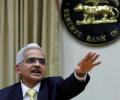
If the new governor can think out of the box even as he signals that he can bat for the RBI cadre and respect its institutional memory, that will go a long way in getting out of the current impasse.

The failure to reform has meant that there is no buzz about job opportunities, or about urban opportunities enticing young people off the farms. And it is this failure that has contributed to the widespread disappointment that threatens to make the next general elections closer than expected, says Mihir S Sharma.

The battle on creating jobs is virtually lost. If the battle for achieving higher growth too is lost, then its political consequences could become difficult to manage, says A K Bhattacharya.

Modi said there was a time when families would celebrate getting gas connections as if they have got home a Mercedes.

Prime Minister Narendra Modi hailed as "historic" the jump.
'The banking sector appears to be on course to recovery,' declares the RBI governor.

How will the Modi Sarkar's likely return affect other nations?
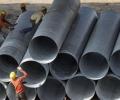
The Insolvency and Bankruptcy Code (IBC) got a leg-up with Tata Steel's acquisition of Bhushan Steel, the first big case to be resolved. Tata Steel CEO & MD T V Narendran tells Ishita Ayan Dutt how this deal moved so quickly while others are still mired in controversies.

Is the SBI chairman leaving the bank in a stronger and better position than what it was? Abhijit Lele finds out.

The system envisaged under the FRDI Bill, if implemented properly, would help improve the efficiency of capital allocation without harming consumers, and without risking the stability of financial firms, says Ajay Shah.

Though the government says public and private shipyards compete on equal terms, public shipyards feast at the high table with the defence ministry, with only scraps being tossed to private shipbuilders.

'If credit is not available, people will postpone buying. That's what has happened.'

The passage of the Bankruptcy Code could set the stage for other important legislation that may see India undergo more economic change than all governments combined since the reforms implemented by P V Narasimha Rao in 1991-93, says Ben Merton.
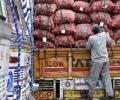
The GST bill is stuck in the Rajya Sabha where the ruling NDA govt does not have a majority as well as stiff opposition by the Congress

Has the Modi government been more at odds with institutions than other governments? There is no doubt that there have been more run-ins. While the RBI and CBI cases have drawn attention, there have been others, less publicised, Subhomoy Bhattacharjee points out.

The government has spent a little less than one-third of the Budget estimate of capital expenditure, it can still spend about Rs 20,000 crore this year without disturbing its fiscal deficit target.

'There is no difference between the earlier government and the present government.' 'They are all following the economic policy based on the Chicago School of thought.' 'This school of thought says the government should have very little role in governing the country and the majority of the work should be handed over to the private sector.' 'This has not succeeded in the US.' 'Yet, it is being tried here by people like Arvind Subramaniam, Arvind Panagariya, Urjit Patel and Raghuram Rajan.'
A way out of the economic slump is to revisit the template of 15 years ago and follow its constituents, recommends Ajay Shah.

"India has become the fastest growing major economy in the world. Despite the global slowdown, we have registered excellent growth. Today, India is a bright spot in the global economy. We are seen as the engine of global growth," he said.

While PNB did not name the other lenders, Union Bank of India, Allahabad Bank and Axis Bank are said to have offered credit based on letters of undertaking (LOUs) issued by PNB. Foreign bank branches too are under investigation.

'This year's Budget didn't give into populist measures everyone was expecting after demonetisation, so I think that was a positive step.' 'Hopefully the Budget will continue in the way it has been.'

Jaitley said a very large number of reforms have taken place over the last few years and that has helped in restoring the credibility of the Indian economy

The ruling by US Judge Steven Rhodes, who cited the city's dismal finances and $18 billion owed to a multitude of creditors in support of his decision, marks a watershed in the history of Detroit.

Top 5 losers include Infosys, TCS, ITC, M&M and HUL.

With an aggressive Opposition and unyielding government, important legislation could be the biggest casualty, as details of the helicopter contract surface.

Amid a grim global scenario, India will have to labour hard to hold on to seven per cent growth in 2016-17.

After helping the government in policymaking since October 2014, Chief Economic Adviser Arvind Subramanian is returning to academics and will be teaching at Harvard Kennedy School on a visiting position. In an interview to Dilasha Seth and Somesh Jha, he says the ease of doing business agenda needs to move forward and India must try to integrate with the global value chains. Edited excerpts.
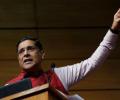
Chief Economic Advisor Arvind Subramanian spoke on a wide range of issues -- from GDP growth and fiscal consolidation to job creation and GST.

Contrary to the bragging that marked its two-year anniversary, the government's timidity on reform is simply astounding.

Investors with stalled projects and mounting bad debt will refinance their loans.

A glance back at some of the important ups and down Indian Inc faced in 2018.
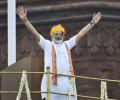
Following is the full text of Prime Minister Narendra Modi's address from the ramparts of the Red Fort on the 73rd Independence Day.
